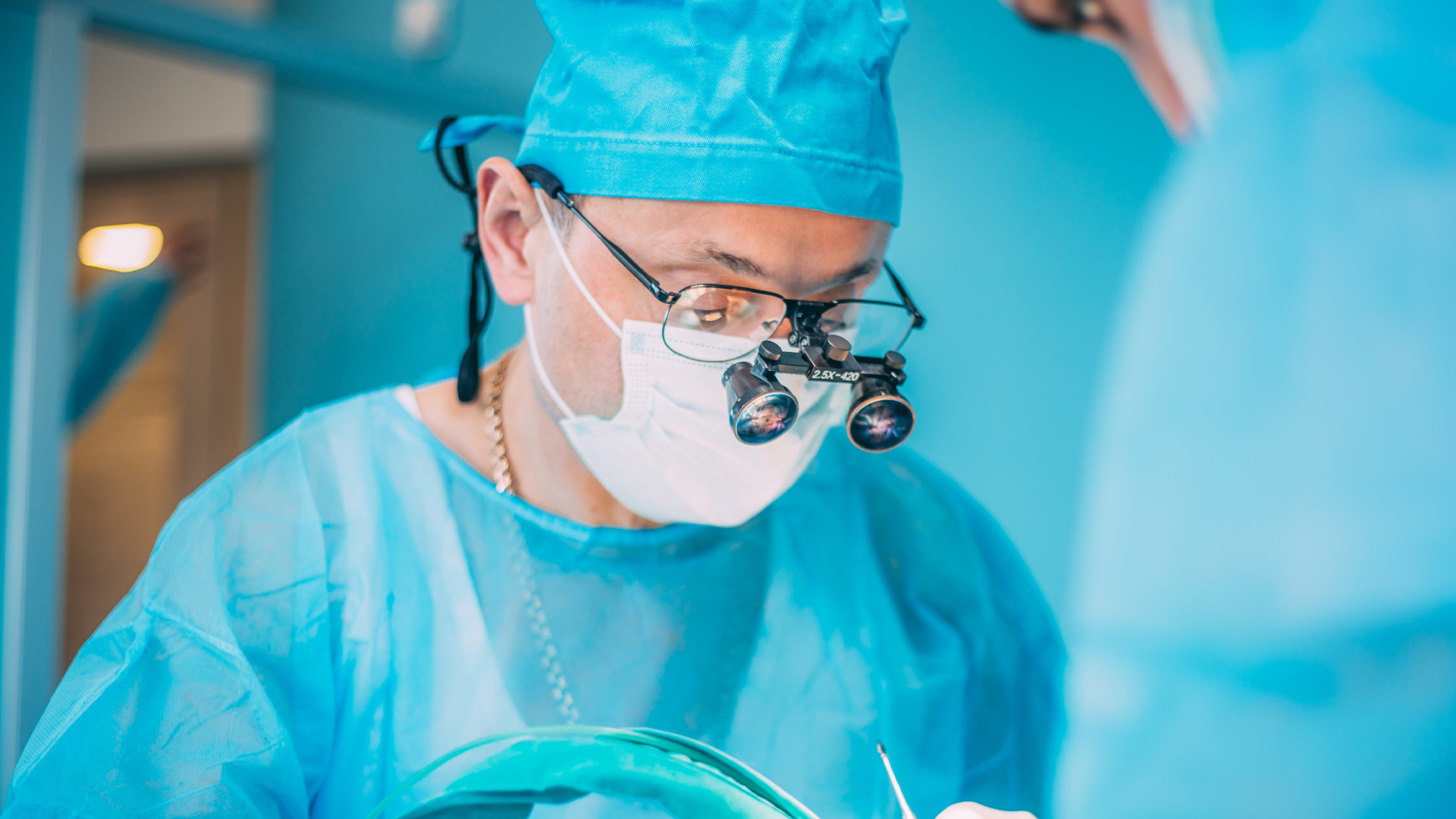
In modern implantology, implantation without an incision, performed with the help of a pre-fabricated surgical guide (template), is considered one of the most precise and minimally invasive methods. During this procedure, the implant is placed in the bone in a predetermined position, which often eliminates the need for a traditional gingival incision.
The process begins with detailed diagnostics. In the first stage, a computed tomography (CT) scan is performed, followed by a digital scan of the patient’s oral cavity. The obtained data is processed in specialized software, where the implant surgeon precisely plans the placement of implants on a 3D model—taking into account the bone anatomy, nerve structures, and the future orthopedic construction.
Upon completion of the digital planning, a high-tech machine manufactures the surgical guide. With the help of this template, the implants are placed exactly in the position planned by the computer.
The main advantage of this method is maximum precision and minimal trauma to the tissues. As a result:
- The duration of the surgery is significantly reduced.
- The postoperative period is milder and proceeds more easily.
- In most cases, sutures are not required.
- Swelling and discomfort are minimized.
Implantation using a surgical guide is recommended in almost all cases, as it ensures high precision in treatment and a predictable outcome. Exceptions include clinical situations requiring tooth extraction, bone grafting, or where bone volume is critically low, necessitating a different surgical approach.
At “Dens” clinic, guided implantation is performed using modern digital technologies and high-precision equipment, ensuring a safe, comfortable, and long-lasting result.